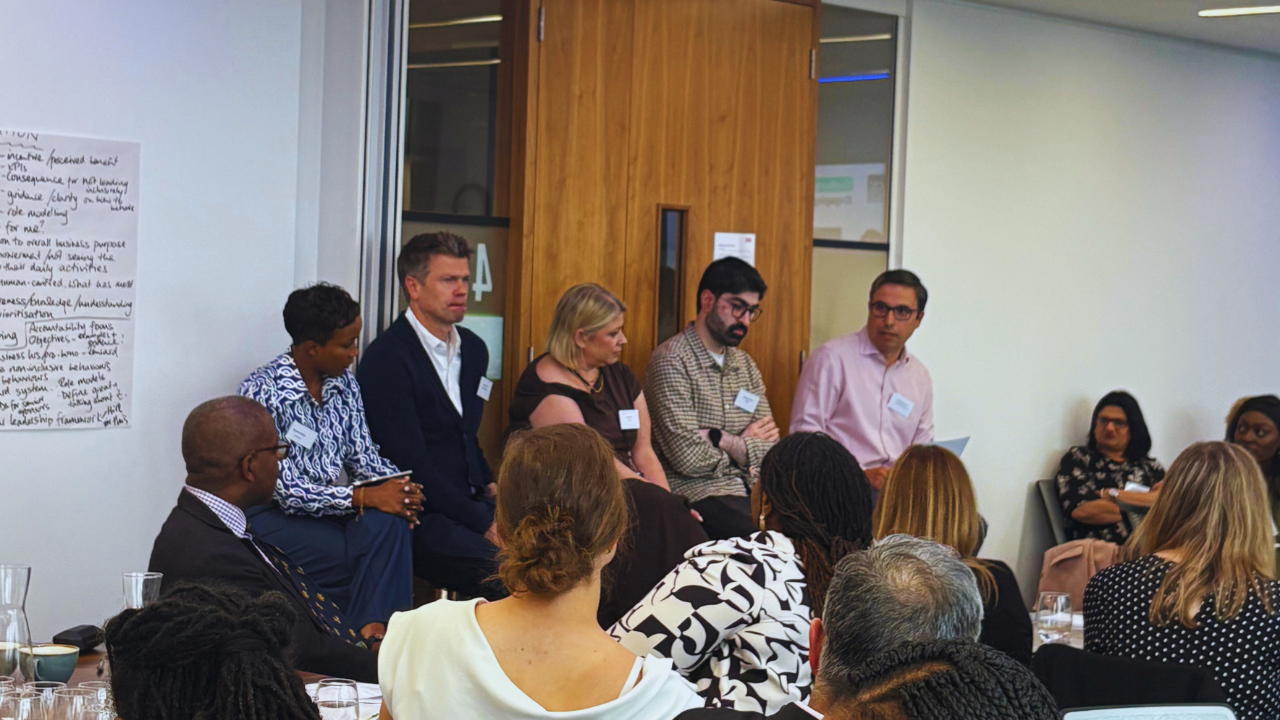
The latest Culture and Inclusion Leaders Summit heard directly from leaders who have navigated the realities of managing teams through periods of significant change while maintaining inclusive management practices.
The panel was chaired by Change the Race Ratio CEO Richard DeNetto and brought together leaders from a range of sectors and experiences, including:
- Dharmesh Patel, Global Finance HR Business Partner at Diageo
- Helen Hay, Chief of Staff at Ampa Group
- Eddie Curzon, Chief Commercial Officer at BusinessLDN
- Patrice Gordon, Executive Coach and Founder of Eminere
Together, they explored what inclusion looks like in practice, how managers can build trust and credibility, and the management capabilities needed to navigate an increasingly complex workplace.
Reflecting on his experience leading teams, Dharmesh Patel emphasised the importance of connecting inclusion initiatives to individual key performance indicators (KPIs). While some initiatives are organisational, their long-term success depends on demonstrating their value to people, teams and business performance.
Helen Hay shared her experience of managing inclusively, noting that employee expectations have changed in recent years and managers have been forced to adapt. She mentioned that expectations are a two-way street, and line managers should feel comfortable with saying ‘no’ to ensure business needs are met, while acknowledging the need for flexibility.
The discussion reinforced the growing importance of empathy in management. Panellists reflected on the challenges of leading teams through periods of uncertainty, from the COVID-19 pandemic to the ongoing technological disruption. During these moments, managers are often expected to provide reassurance despite not having all the answers themselves. Dharmesh spoke about the importance of responding quickly and authentically when significant events affect employees. Managers may not always fully understand an individual's experience, but showing empathy and acknowledging the impact of events can help build trust and connection.
Eddie Curzon reflected on lessons learned during the pandemic, when managers needed to work hard to understand the different circumstances facing employees across teams and locations. Emotional intelligence became a critical capability, helping managers consider how decisions might affect individuals in different ways. Patrice Gordon echoed this sentiment, highlighting the increasing importance of pastoral care within management roles. As workplaces continue to evolve, employees increasingly expect managers to demonstrate empathy, curiosity and genuine interest in their experiences.
While many management philosophies encourage managers to treat others as they would like to be treated, the panel explored a more nuanced approach. Patrice challenged managers to focus instead on understanding how individuals want to be treated. Assumptions based on personal preferences can unintentionally overlook the needs and expectations of others. For example, some may welcome personal conversations and support, while others may prefer to maintain clearer boundaries between their professional and personal lives. Effective inclusion, the panel suggested, begins with understanding these differences rather than assuming everyone experiences work in the same way.
Another key theme was the importance of consistency between what managers say and what they do. The panel highlighted the importance of clear and concise communication that cuts through, especially in an age where there is information-overload and employees’ time and attention is stretched. Helen noted that staff at all levels can quickly lose interest if there are overly complex or jargon-filled communications, so managers should prioritise plain English over corporate buzzwords.
Patrice noted that one of the biggest challenges facing organisations is ensuring that commitments to inclusion are reflected in everyday behaviours and decisions. Employees are increasingly able to identify gaps between organisational messaging and lived experience. The panel discussed how managers can create greater psychological safety by sharing their own experiences and demonstrating vulnerability. When employees see their senior managers speak openly about challenges and mistakes, it creates space for them to do the same.
For more information on the role of line managers in building inclusive teams, please read our workshop summary [insert link].