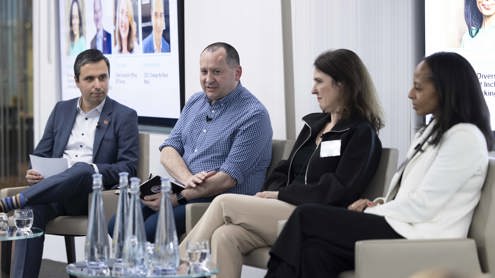
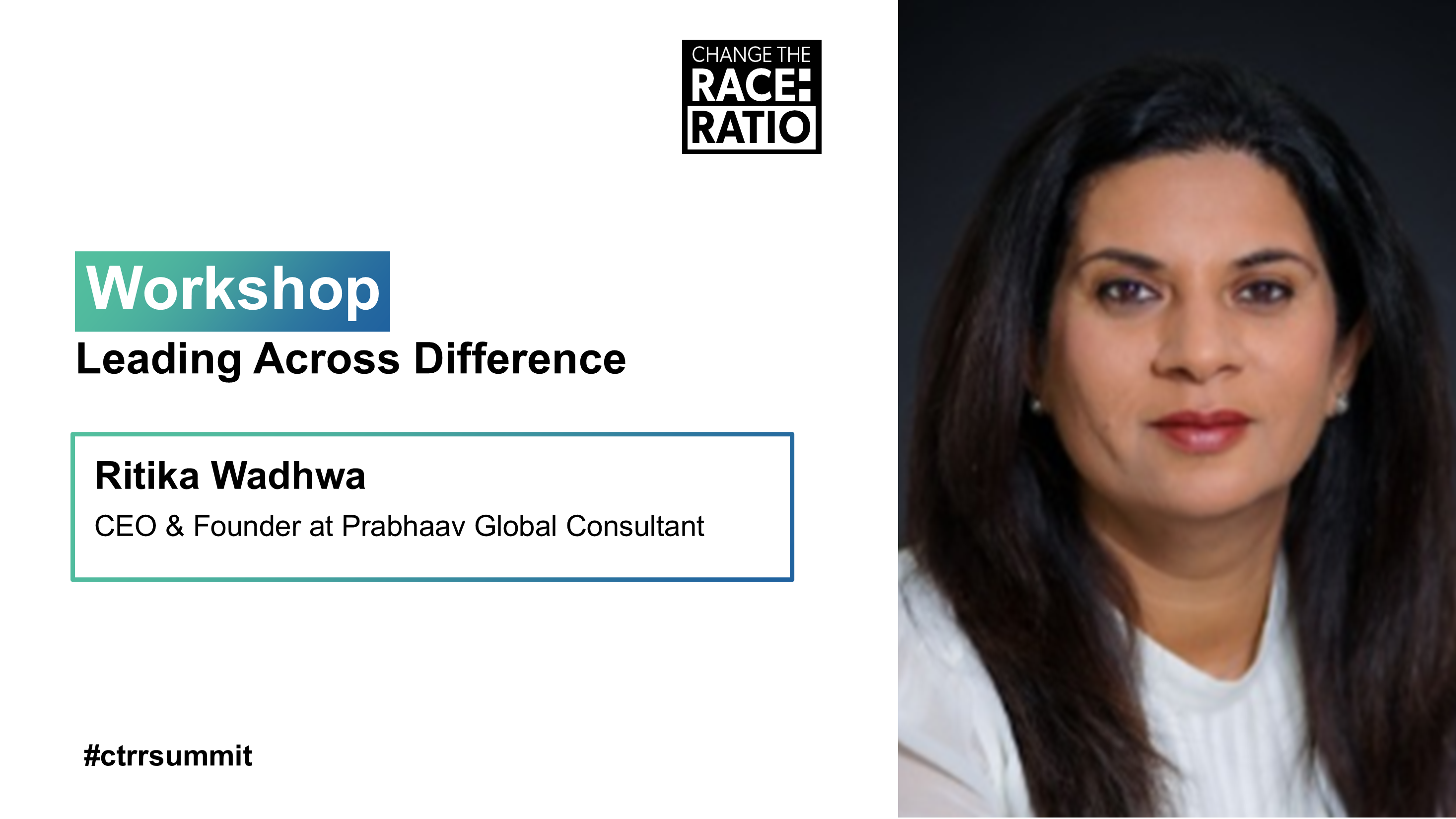
At Change the Race Ratio’s Culture and Inclusion Leaders’ Summit, we were joined by Ritika Wadhwa, founder of Prabhaav Global, for an interactive workshop exploring how cultural intelligence (CQ) can help leaders navigate difference, influence stakeholders and sustain inclusive impact.
The workshop provided an opportunity for members to reflect on their approach to workplace inclusion, how they engage with senior leaders and what they can do differently to embed inclusive practices within wider business priorities. Ritika introduced the four capabilities of cultural intelligence – Drive, Knowledge, Strategy and Action – and explored how members could apply these to the challenges they face within their organisations.
The workshop began by asking members to reflect on why they engage in inclusion work, their motivations, and what can cause them to lose momentum. Whilst personal experiences of inequality and a desire to create fairer workplaces were strong motivators for members, organisational change, competing priorities and resistance from stakeholders were identified as challenges to sustaining their impact. Drawing on her work with different senior leadership teams, Ritika demonstrated how establishing a shared organisational purpose can help leaders navigate differences and redirect their focus towards collective outcomes.
Managing cross-cultural teams
Cultural intelligence requires us to recognise how our own backgrounds, experiences and behavioural preferences influence the way we interpret the actions of others. Through a series of interactive exercises, members explored how differences in communication styles, attitudes towards hierarchy and approaches to decision-making can create misunderstandings and undermine trust between colleagues. A prime example is how organisations seeking to establish a speak-up culture may encourage colleagues to openly challenge senior leaders. However, employees who have cultural backgrounds where challenging authority is discouraged may not feel comfortable doing so, despite having valuable perspectives to contribute.
Similarly, colleagues who require greater detail and context are likely to have high uncertainty avoidance, while those who can work in a risk-on environment or with limited information are likely to have a low uncertainty avoidance. Recognising these differences can help leaders harness the strengths of both, especially in a cross-cultural or international environment.
Adapting behaviours to create a more inclusive workplace
Part of what makes cultural intelligence an important part of building an inclusive workplace is that it requires individuals to translate their knowledge and awareness into behavioural change. Through an exercise in which members were asked to hold conversations without making eye contact, Ritika demonstrated how everyday behaviours can be experienced differently by individuals.
This prompted a discussion about the barriers neurodivergent colleagues may face in the workplace, particularly where different communication styles can be perceived as a lack of confidence or engagement. Members were encouraged to recognise where established workplace norms may inadvertently disadvantage colleagues and consider how they can adapt their own behaviours without compromising their authenticity.
Turning cultural intelligence into everyday habits
To close the session, the workshop reinforced that sustaining impact in inclusion requires more than awareness and good intentions. Rather, it requires an understanding of what motivates individuals and others, challenging assumptions, planning our approach to stakeholder engagement and adapting our behaviours. Ritika emphasised that cultural intelligence is a skill that needs to be developed through regular practice, which ultimately leads to a change in habits and behaviours that better equips leaders and organisations to benefit from a diverse range of talent. Ritika’s new book – Not Optional – explores cultural intelligence in greater depth with practical case studies and can be found here.