
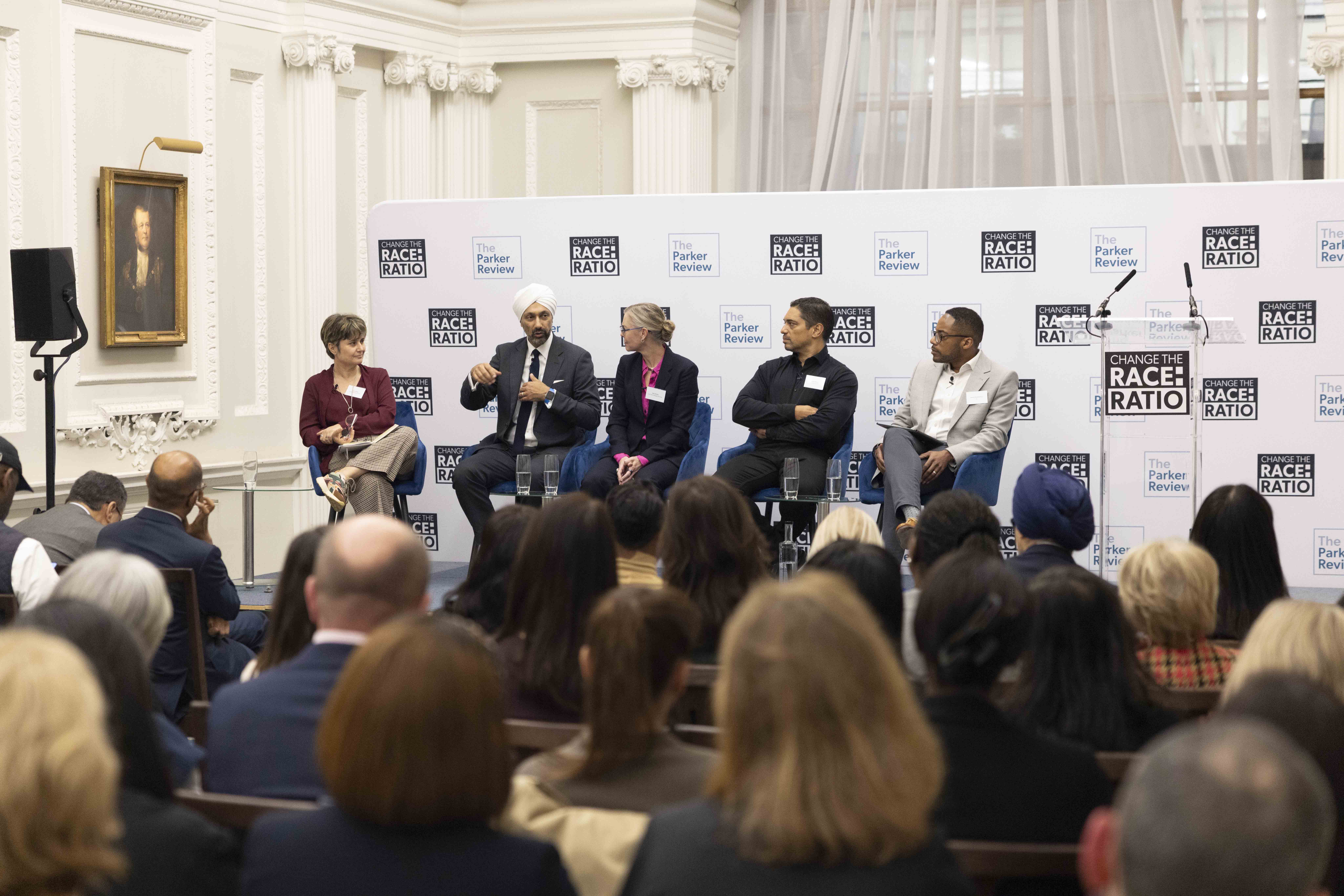
A panel discussion brought together leaders from business, technology and policy to explore a critical but often overlooked question: what will the rise of artificial intelligence mean for fairness, diversity and access to opportunity in the workplace?
Our panellists
- Lord Kulveer Ranger, Science and Technology Select Committee Member
- Keri Gilder, CEO, Colt Technology Services
- Piers Linney, Founder, Implement AI
- Shaun Scantlebury, Partner, EY
- Karen Rossi, Chief Information Officer for Enterprise Services, Lloyds Banking Group (Facilitator)
While much of the public conversation around AI focuses on productivity, efficiency and risk, the panel emphasised that AI is already shaping decisions about hiring, promotion, performance assessment and workforce structure. As a result, the technology is not simply an IT issue, it is a leadership and governance challenge for organisations to address proactively.
Below are the key insights from the discussion.
AI governance must become a Board level responsibility
Panellists agreed that many boards are still at an early stage of understanding the implications of AI. Yet the scale of the technology’s potential impact means that AI oversight should increasingly become part of core board governance, alongside areas such as risk, audit and remuneration.
AI has the capacity to transform operating models, reshape entire industries and fundamentally alter workforce structures. Without clear governance, organisations risk deploying tools that inadvertently embed bias, create new risks or undermine long-term talent pipelines.
Lord Kulveer Ranger emphasised that boards need to ensure they have the breadth of perspectives and expertise necessary to challenge and understand AI adoption. Diversity of thought is critical here: if everyone around the board table has the same limited understanding of the technology, meaningful oversight becomes difficult.
Lord Ranger also noted, “AI is not just a technology conversation it is a leadership conversation.”
The workforce of the future will be human AI teams
Another major theme was the growing reality that organisations will soon operate with workforces that include both human employees and AI agents.
In the coming decade, AI systems are expected to perform a growing share of cognitive tasks, while robotics may increasingly automate physical labour. This could fundamentally change how companies hire, train and structure their teams.
Boards therefore need to start asking new questions:
- What roles will humans continue to perform alongside AI systems?
- How will organisations develop the skills needed for this new environment?
- How will AI reshape career pathways within organisations?
Keri Gilder suggested that within ten years AI agents could represent a significant proportion of the effective workforce, making it essential for companies to rethink talent development strategies today.
Entry-level roles and talent pipelines may be at risk
A significant concern raised during the discussion was the potential impact of automation on entry-level roles, which traditionally serve as the starting point for many careers.
AI is already beginning to automate tasks in areas such as customer service, administration and junior professional roles. These positions often serve as critical entry routes into organisations, and they are often roles where women and ethnic minority employees are overrepresented.
If these roles disappear without alternative pathways being created, organisations risk weakening the very talent pipelines that have supported progress on diversity and social mobility.
Piers Linney noted, this could lead to a “diamond-shaped” workforce structure, with fewer entry points and limited opportunities for new talent to rise through the ranks.
Equitable access to AI tools and skills is essential
The panel also highlighted the importance of ensuring equitable access to AI tools and training within organisations.
Shaun shared some research from a recent EY report ‘Performance Reimagined’ that shows that patterns of AI usage can vary across demographic groups. With 55% of men reporting daily use of AI compared to 45% of women, the report also found that daily use of AI was higher amongst ethnic minority employees.
The key issue is not whether these patterns are inherently good or bad but whether organisations are actively monitoring who is accessing AI technologies and who is developing the skills to use them effectively.
Learning and development will play a crucial role here. The EY report suggests that it takes 80 hours of training to realise significant productivity gains from AI, meaning organisations must invest deliberately in skill-building across their workforce.
What could AI mean to diversity and inclusion
Several panellists warned that AI could unintentionally undermine progress on diversity and inclusion if organisations fail to act deliberately.
The early signs are showing the AI transformation is happening in positions that are disproportionately held by women or ethnic minority employees. Without intervention, this could lead to reduced representation across parts of the organisation.
Keri suggests that forward thinking organisations are therefore beginning to rethink career pathways and investing in accelerated learning programmes to help employees transition into new roles, particularly in areas such as technology and engineering.
Leaders were encouraged to take a proactive approach, identifying which roles are most likely to be automated and ensuring employees in those areas have access to training and advancement opportunities.
Regulation must balance innovation and protection
The discussion also touched on the evolving regulatory landscape around AI.
While some argue for stronger regulation to manage potential risks, others caution that overly restrictive frameworks could hinder innovation, particularly for smaller companies and start-ups.
Panellists noted that policymakers are currently trying to strike a balance between protecting individuals and markets from harm while allowing space for innovation and experimentation.
Rather than rushing into sweeping regulation, some governments are choosing to monitor developments closely, relying on existing regulatory frameworks while evaluating how AI evolves across industries.
The real opportunity is shaping the future of work
Despite the challenges discussed, the panel ended on a more optimistic note.
Technological change has historically created new industries, new roles and new forms of opportunity even as it disrupts existing ones. The rise of AI may ultimately follow a similar pattern.
The key question for today’s leaders is how they will shape that transition.
Those in leadership positions today have lived through decades of technological transformation from the rise of the internet to smartphones and cloud computing. The challenge now is to use that experience to guide organisations through the next wave of change.
Lord Ranger concluded, the real task for leaders is not simply adapting to AI, but ensuring that the future it creates remains open, inclusive and full of opportunity.