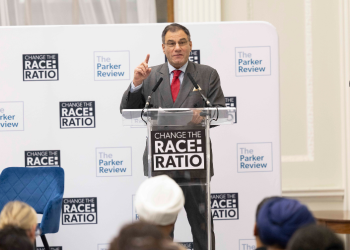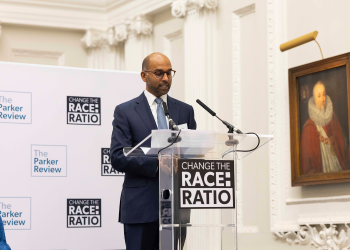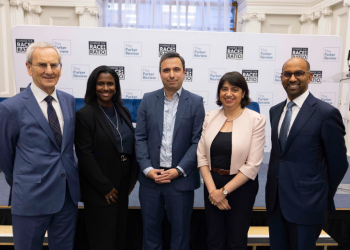

Leaders from government and business gathered to reflect on the progress made in improving ethnic diversity in UK business leadership and the work still ahead. Our speakers highlighted significant achievements over the past decade while stressing that sustaining progress will require renewed commitment to transparency, accountability and inclusive leadership cultures.
Below are the key insights emerging from the discussion.
Diversity and inclusion remain central to economic growth
Opening the event, Minister Seema Malhotra MP emphasised that inclusive leadership is not only a social priority but an economic one. She reaffirmed the government’s commitment to tackling racial inequalities in the workplace and ensuring that Britain’s economy fully benefits from its diverse talent.
Central to this agenda is the government’s planned introduction of mandatory ethnicity and disability pay gap reporting for large employers. According to the Minister, greater transparency will help organisations better understand their workforce, identify barriers to progression, and implement evidence-based solutions.
The policy builds on lessons from gender pay gap reporting introduced in 2017. By shining a light on disparities, organisations can ask critical questions about who is progressing, where gaps exist, and what interventions are needed to ensure opportunity is truly open to all.
Minister Malhotra also highlighted the work of the Race Equality Engagement Group, chaired by Baroness Lawrence, which is gathering insights from ethnic minority communities to inform policy and improve access to education, skills and entrepreneurship.
Her message was clear: fairness, opportunity and economic growth are mutually reinforcing goals. Unlocking the full potential of the UK workforce benefits both business performance and society as a whole.
A decade of the Parker Review has driven real change
Reflecting on the impact of the Parker Review since its launch in 2015, David Tyler, outgoing Chair, highlighted the significant transformation in boardroom representation.
In just over a decade, the proportion of FTSE 100 companies with at least one ethnic minority director has risen dramatically from just over half in 2019 to 98% today, effectively meeting the review’s original target.
Representation across the wider FTSE landscape has also improved:
- 20% of FTSE 100 directorships are now held by individuals from ethnic minority backgrounds
- 16% of FTSE 250 directorships are held by ethnic minority leaders
- A record 14 ethnic minority CEOs now lead FTSE100 companies
David stressed that these changes matter not only for fairness but for better decision-making. Boards with broader perspectives are less vulnerable to groupthink and are better positioned to navigate a complex and globalised business environment.
However, he cautioned that progress at board now be matched by improvements in the executive teams and pipeline. Ethnic minority representation in senior management teams remains around 11%, compared with 17% of the UK working-age population.
“This work has always been about helping companies build better businesses. Harnessing the full talent of society strengthens economic growth and creates fairer opportunities for everyone.”
Representation is improving but progress remains fragile
Syreeta Brown, Vice Chair of Change the Race Ratio, reminded the audience that while the data shows encouraging progress, it should not lead to complacency.
The latest Parker Review shows that 20% of FTSE 100 board members are from ethnic minority backgrounds, and more than half of these boards now have more than one such director.
Yet challenges remain, particularly at the pipeline level. Representation in senior leadership positions is proving slower to change, and Black representation in board and senior management roles has declined this year.
Syreeta cautioned that the conversation must move beyond headline outcomes and address the underlying drivers of change.
“Progress is fragile,” she said. “We need to focus on the inputs on culture, behaviour and leadership accountability if we want the outcomes to continue improving.”
She also emphasised the personal importance of initiatives such as the Parker Review. For professionals navigating corporate careers from underrepresented backgrounds, visible role models and accountability mechanisms can provide the encouragement needed to continue striving for leadership roles.